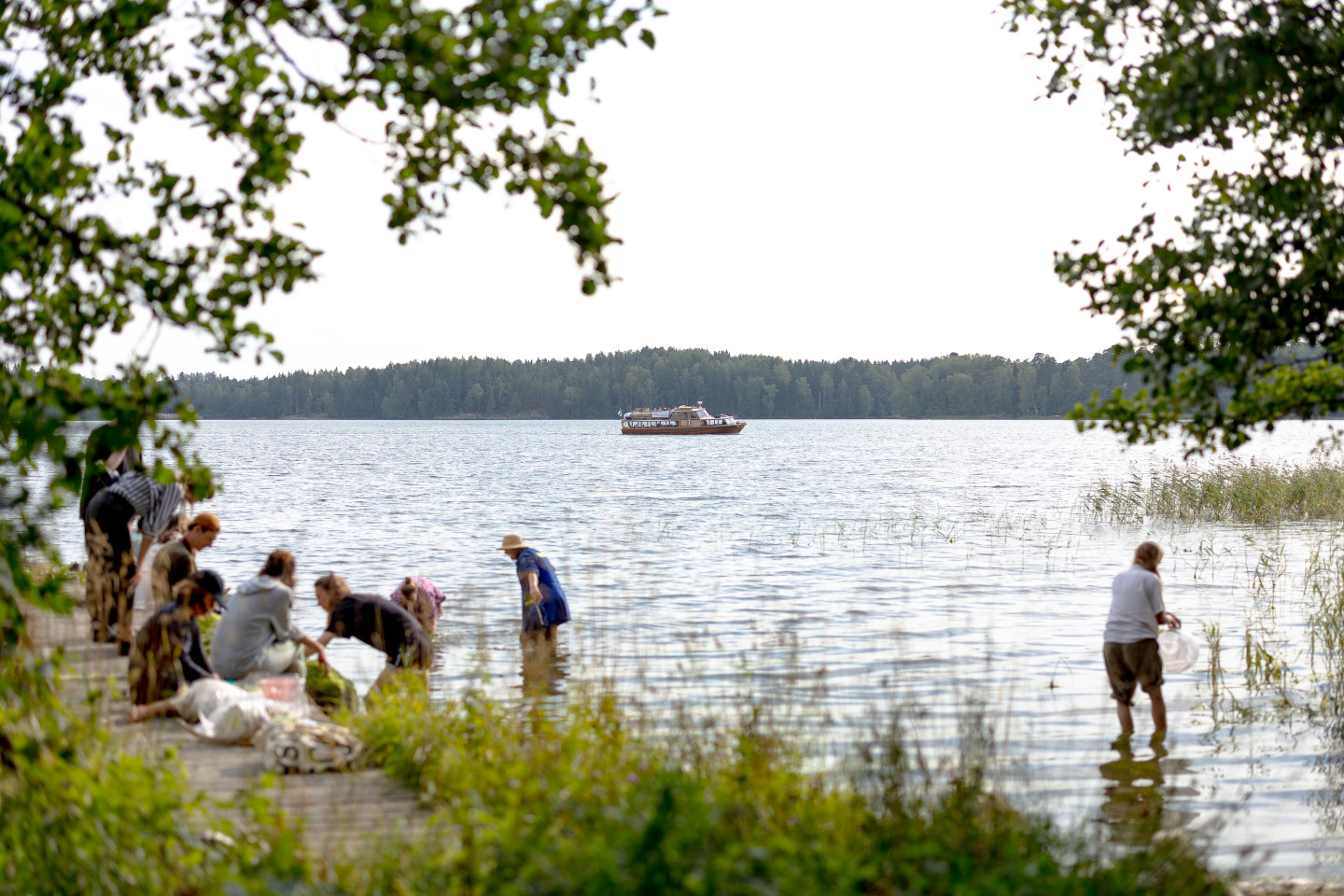
Guarding the Baltic Sea started in 2025 as a multidisciplinary art project set on the island of Vartiosaari (guarding island), located in the Helsinki archipelago in Finland. Initiated with the goal to raise public awareness of the ecological challenges facing the Baltic Sea and other bodies of water, including climate change, pollution, and biodiversity loss, it brought together artists from Finland, Estonia, Poland, Germany and France through artistic residencies. Activity formats such as an international conference, workshops together with Aalto University, an exposition, a video production and the recording in a German television program Kulturzeit with over 80 000 viewers have contributed significantly to increase visibility and to strengthen international networking and dialogue between art, science and politics. Based on the results Guarding the Baltic Sea II is a continuation of the first edition of the project. In 2026 the project involves again artists from different European countries who will realise artistic inquiries and discover new paths of collaboration and experimentation through artistic residencies. Following a second edition of an international conference and an exposition of the working results, a workshop with different EUNIC Clusters (e.g. Greece, France, Netherlands, Türkiye) and international experts from art, science, politics will evaluate and discuss innovative solutions how ocean literary could be brought to life and how knowledge, empathy and action can be combined.
Stay tuned for more information coming soon!