REPURPOSE explored how underused urban spaces in Amman can be transformed into temporary third places. Implemented by the EUNIC Cluster Jordan in collaboration with local initiatives, the project brought together European and Jordanian practitioners to test how a building that had stood empty for decades could be reactivated as two cultural hubs.
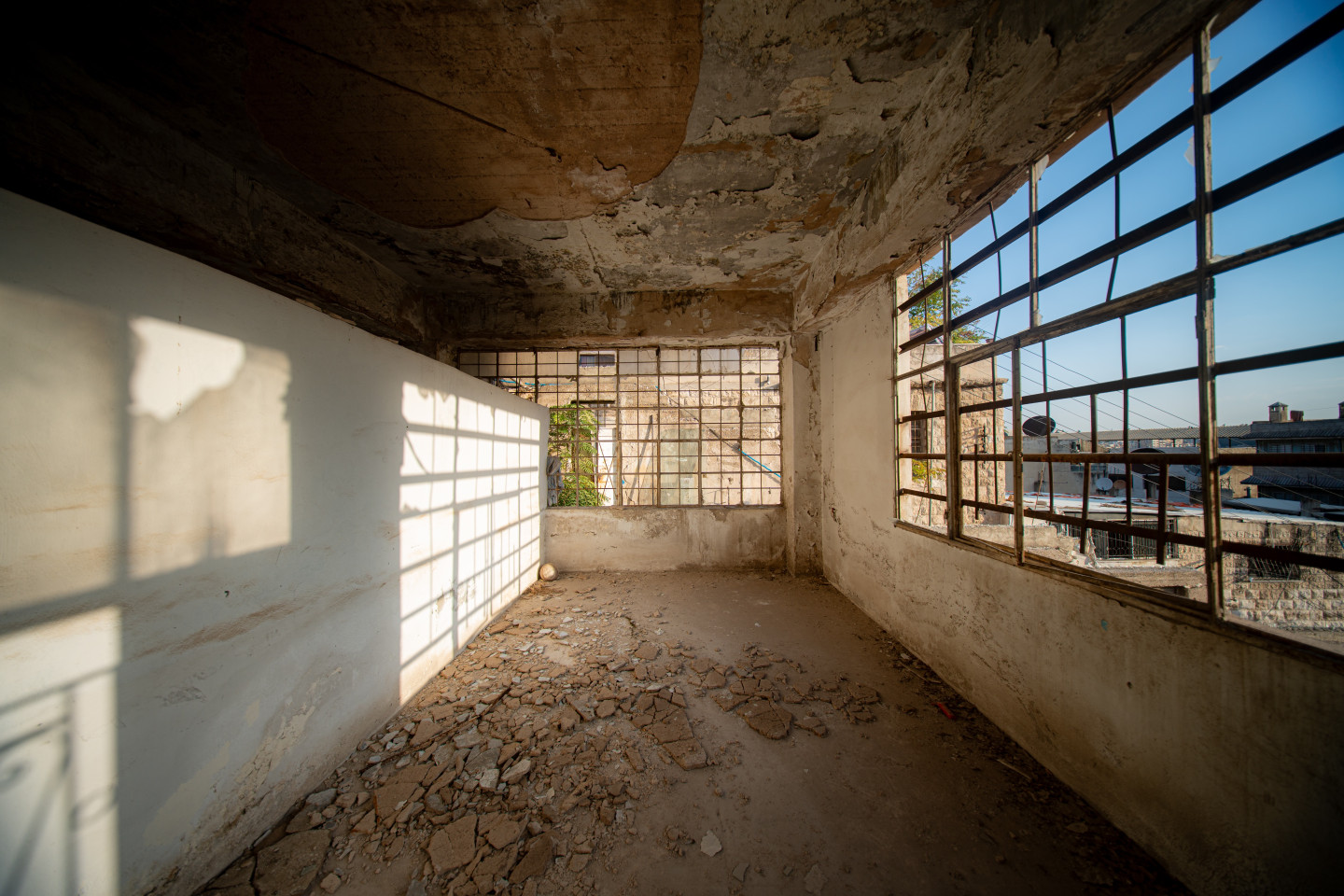
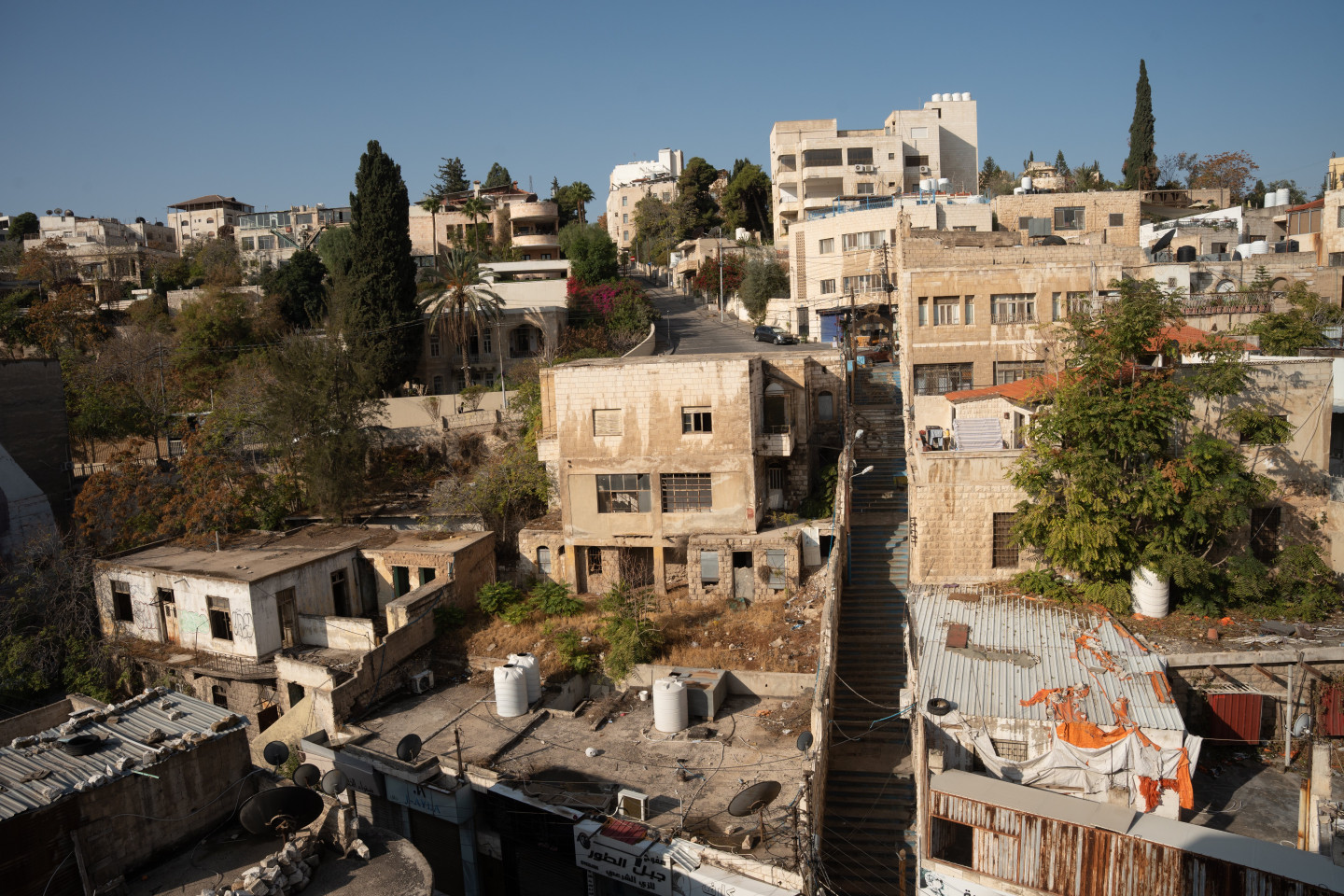
Walking through Amman’s city centre, it is difficult to go more than a few hundred metres without encountering a derelict building. Due to inheritance disputes, economic constraints or unclear ownership structures, many of these buildings have remained vacant for decades. They often become social and environmental hazards, pose risks to surrounding neighbourhoods, and represent a significant loss of urban and cultural potential.
At the same time, artists and cultural practitioners – particularly emerging artists and especially women – face a severe lack of affordable, accessible and safe spaces in which to work, experiment, and engage with audiences. REPURPOSE responds to these challenges by exploring how limited resources, strategic partnerships and collective action can create tangible value for cultural communities and neighbourhoods alike.
Living differently in the city is possible when we rethink ownership and community. Common spaces foster social cohesion and allow arts and culture to thrive.
Lama Sadeh, Sadeh
Purpose and goals
REPURPOSE set out to explore how temporary cultural interventions can function as third places – spaces beyond home and work that foster social connection, learning and co-creation. The project aimed to strengthen local initiatives in developing sustainable, space-based concepts; to deepen collaboration between European and Jordanian cultural actors; and to generate practical knowledge on how arts and culture can contribute to more inclusive and resilient urban environments in Amman.
REPURPOSE reflects exactly what EUNIC Cluster Jordan stands for: bringing together the best practices, expertise, and mentorship from countries as diverse as Europe could be, responding to local challenges and creating added, lasting benefit in the encounter of both. In that case urban initiatives from the EU and Jordan – to learn from one another and to find solutions to real needs within Amman’s cultural scene and civil society, by piloting concrete interventions that create much-needed spaces for cultural and community work.
Dr. Christian Diemer, President of the EUNIC Cluster Jordan
The heart of the project: Two cultural initiatives from Amman
At the core of REPURPOSE are two local cultural initiatives that would jointly activate and animate an abandoned building, supported by European and Jordanian partners. Scouts identified several potential buildings, after which an open call and a selection process involving local experts led to the choice of two initiatives:
- Underground Amman, founded and managed by Alaeddin Rahmeh and Hannah Redekop, focuses on creating a hip-hop and street-art centre for youth. The initiative provides young people with access to workshops and mentoring in disciplines such as rap, dance, graffiti and urban culture, offering both creative expression and community support.
- Sadeh, led by Lama Sadeh, is establishing an artists’ collective and shared working space. Sadeh aims to provide artists and cultural practitioners with an affordable environment to work, experiment and exhibit, while actively engaging local audiences through exhibitions and community-oriented formats.
From Amman to Europe – and back
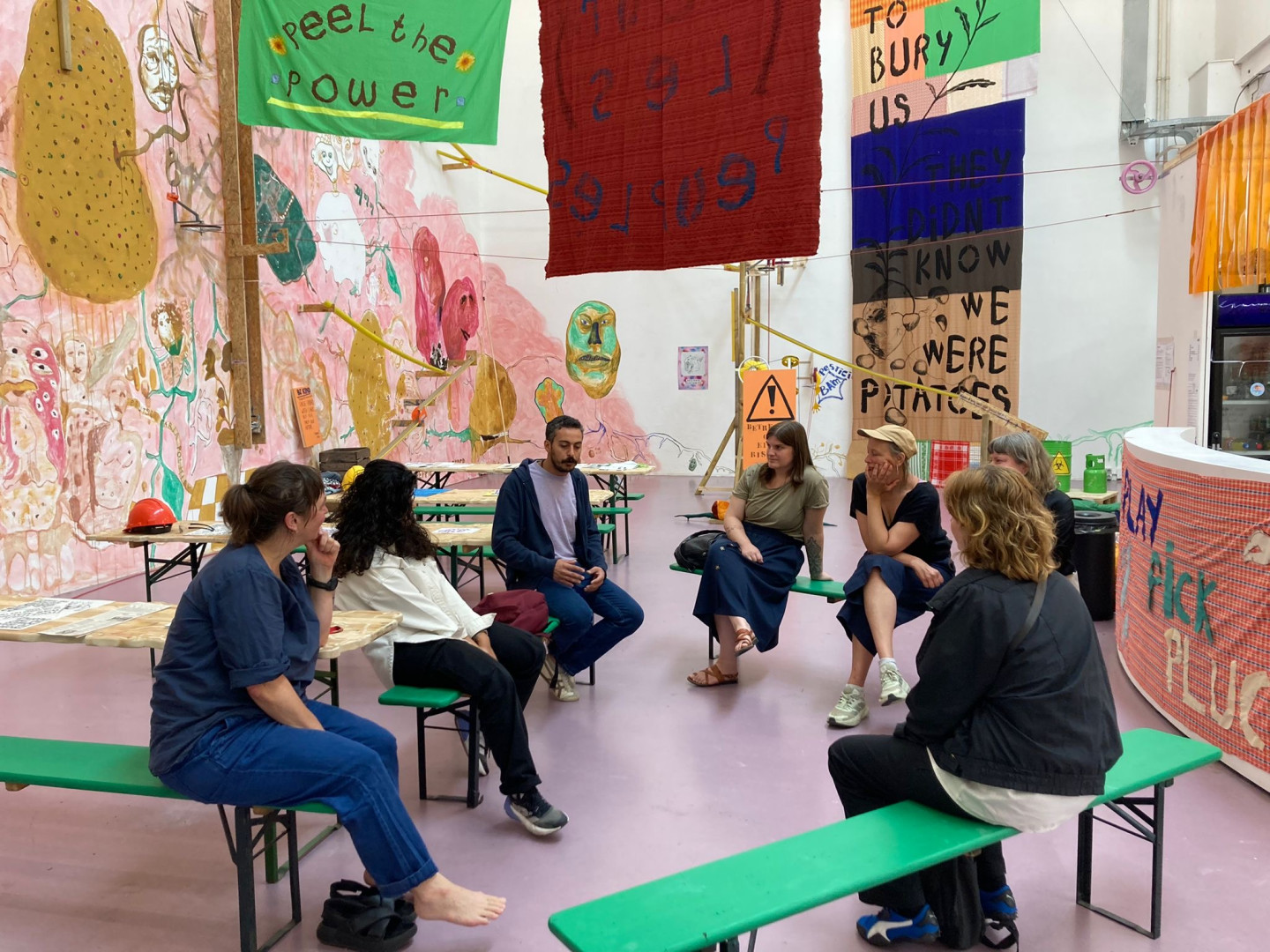
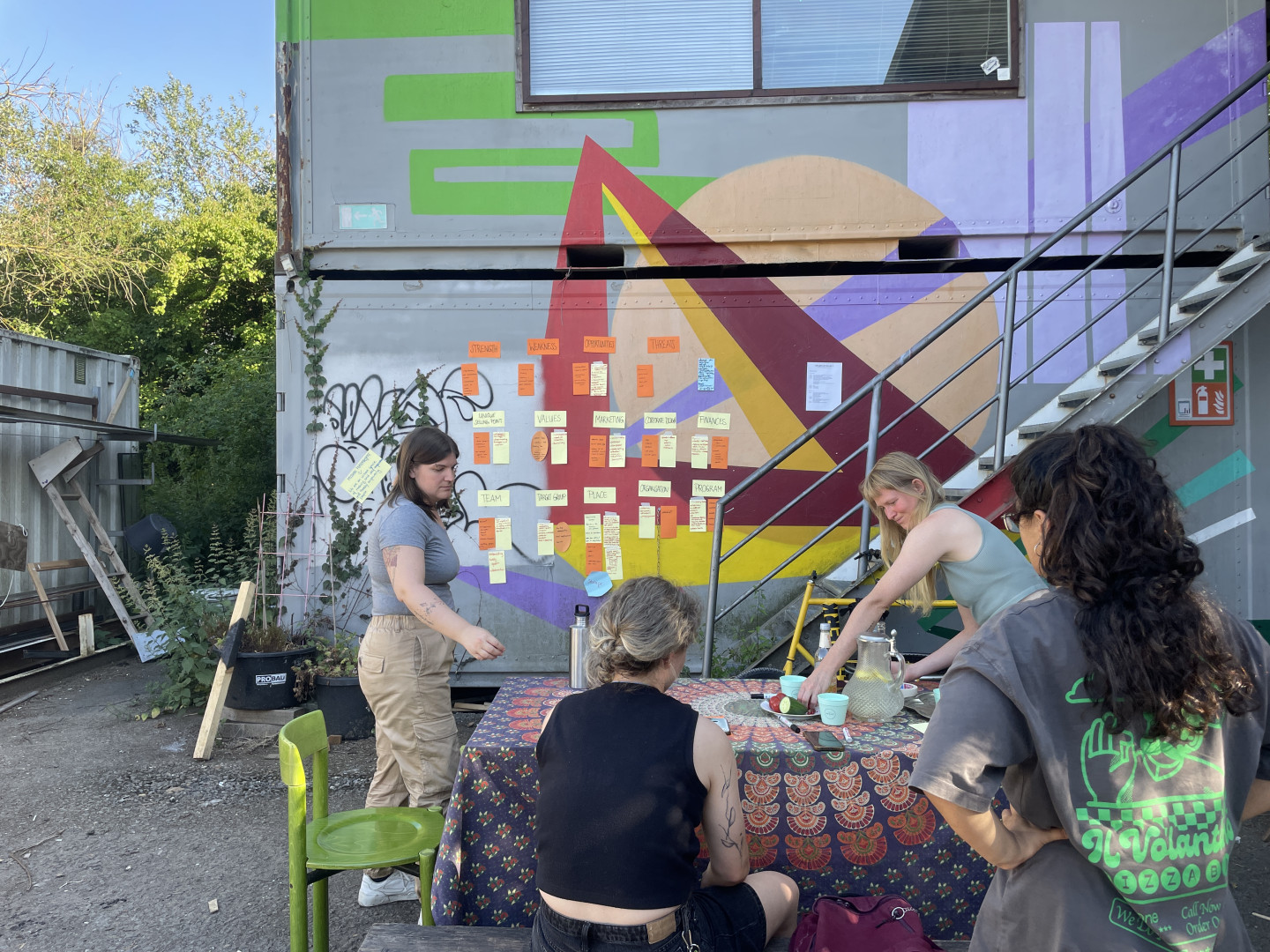
Mentorship was a central pillar of the project. In many European countries, the cultural reuse of urban spaces has been an established practice for decades. Two initiatives, PLATZprojekt e.V. in Hannover and Loom – practice for cultural transformation in the Netherlands, were selected to mentor the Jordanian partners. During an exchange trip to Germany and the Netherlands, the Amman-based teams visited existing initiatives, exchanged experiences and discussed structural differences between European and Jordanian contexts.
These exchanges proved highly valuable, offering inspiration while also sharpening awareness of constraints and opportunities in Amman. Mentorship continued through regular online meetings, supporting the further development of the concepts alongside the renovation of the building.
Our mentors have been an incredible support, they are truly invested in our initiative and want to see us succeed. They’ve also played an important role giving us outside perspective when we’re knee-deep in the work on the ground; having their bird-eye-view perspective helps us take a step back and remember our strategy and philosophy behind the project.
Hannah Redekop, Underground Amman
Coming together for a common goal
REPURPOSE was implemented by the EUNIC Cluster Jordan and coordinated by the Goethe-Institut Jordan, in partnership with the Embassy of the Kingdom of the Netherlands, the Embassy of the Republic of Poland and the Austrian Embassy. A key milestone was the involvement of the Greater Amman Municipality, which manages a number of vacant buildings and shares responsibility for addressing the growing issue of urban vacancy.
Next steps ahead
REPURPOSE strengthened the capacity of both initiatives to articulate their visions and develop concrete, space-based concepts. A centrally located building – vacant for decades – was secured. Its visibility and accessibility make it an ideal location for reaching diverse audiences. The initiatives will be able to activate the space for nearly two years beyond the formal project period.
The project demonstrated how temporary interventions, supported by mentoring and a community-driven approach, can contribute to addressing urban challenges. REPURPOSE laid the groundwork for future collaborations. As a pilot project, it demonstrated what can be achieved with limited financial means and will, over the next years, hopefully inspire further follow-up initiatives.