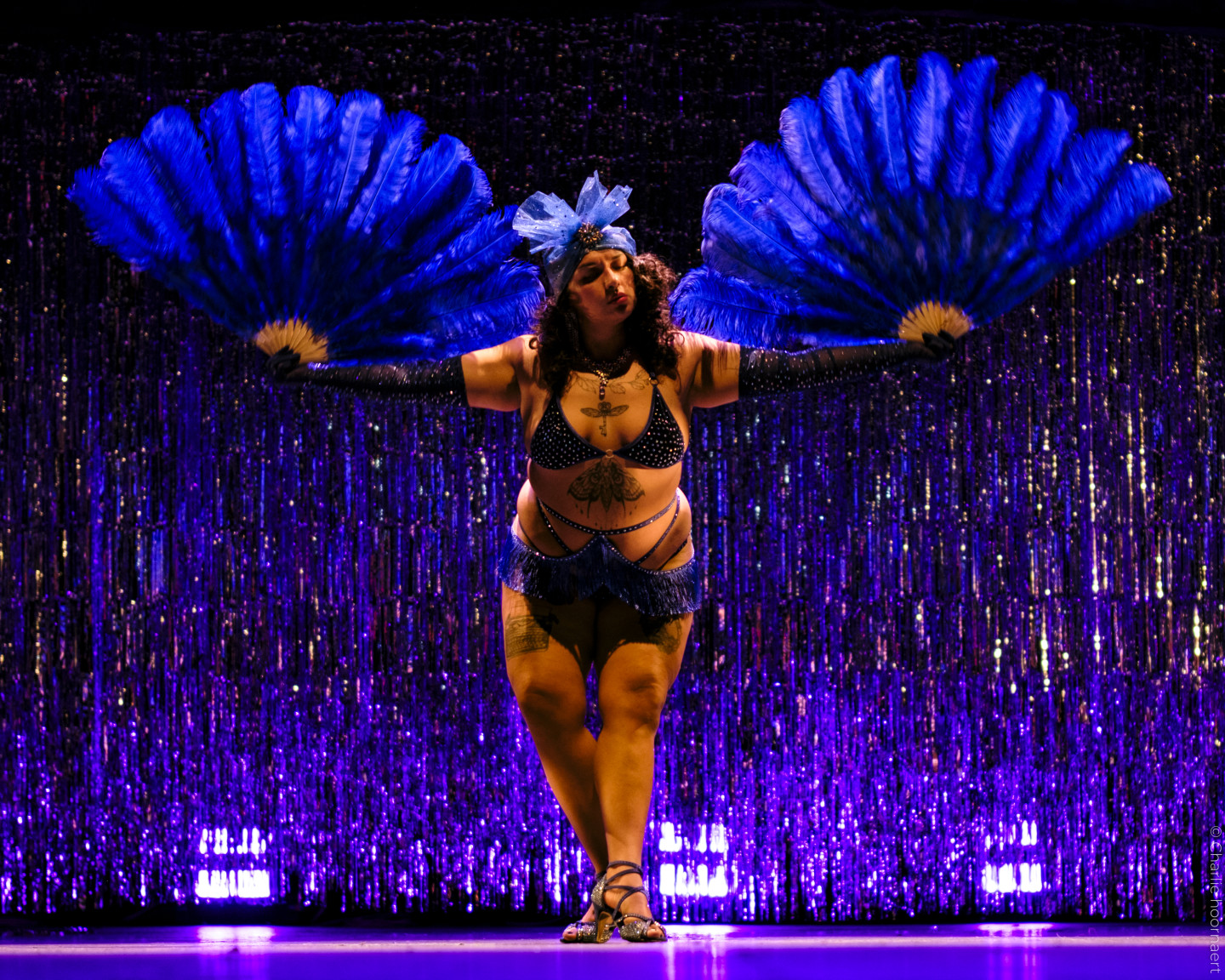
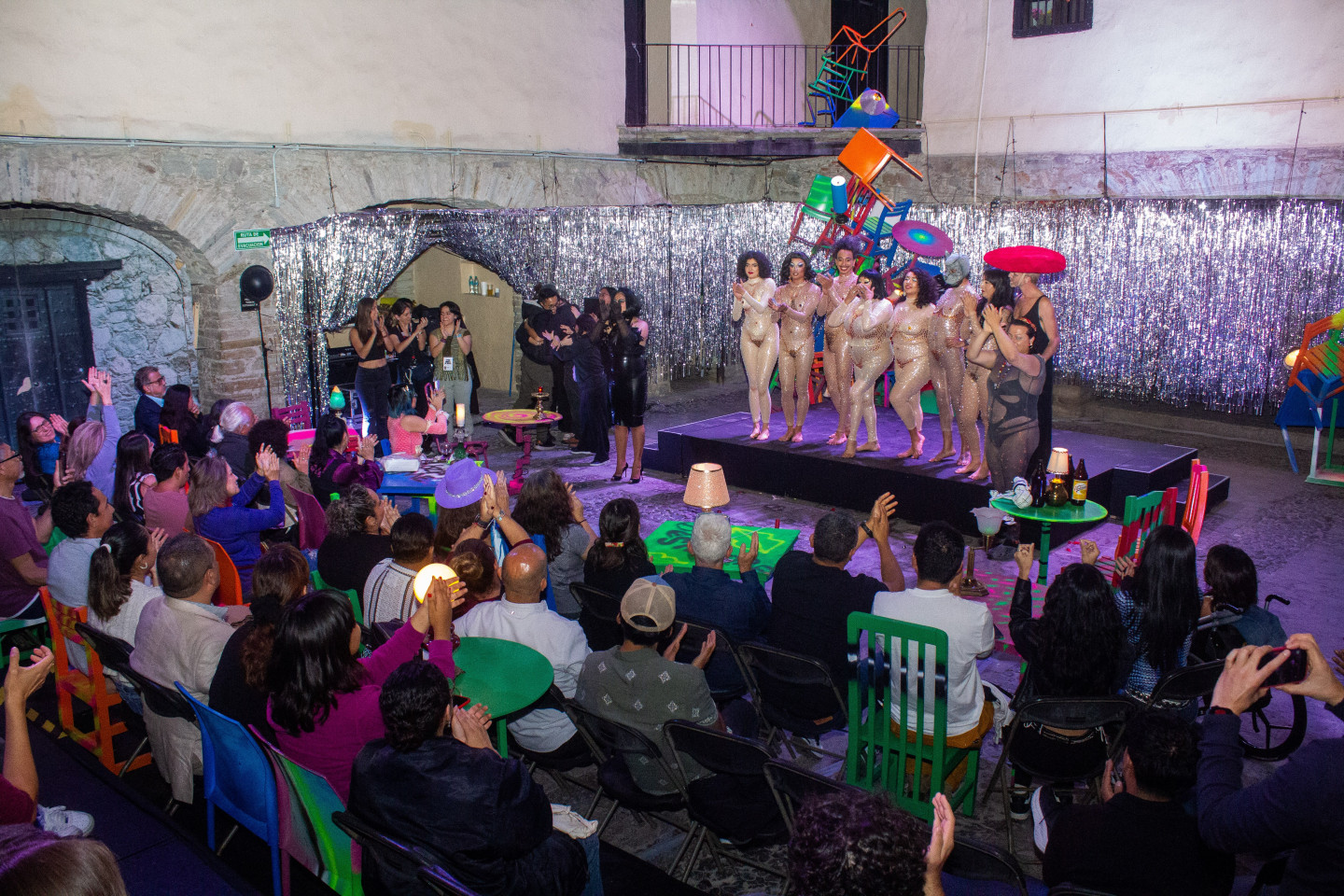
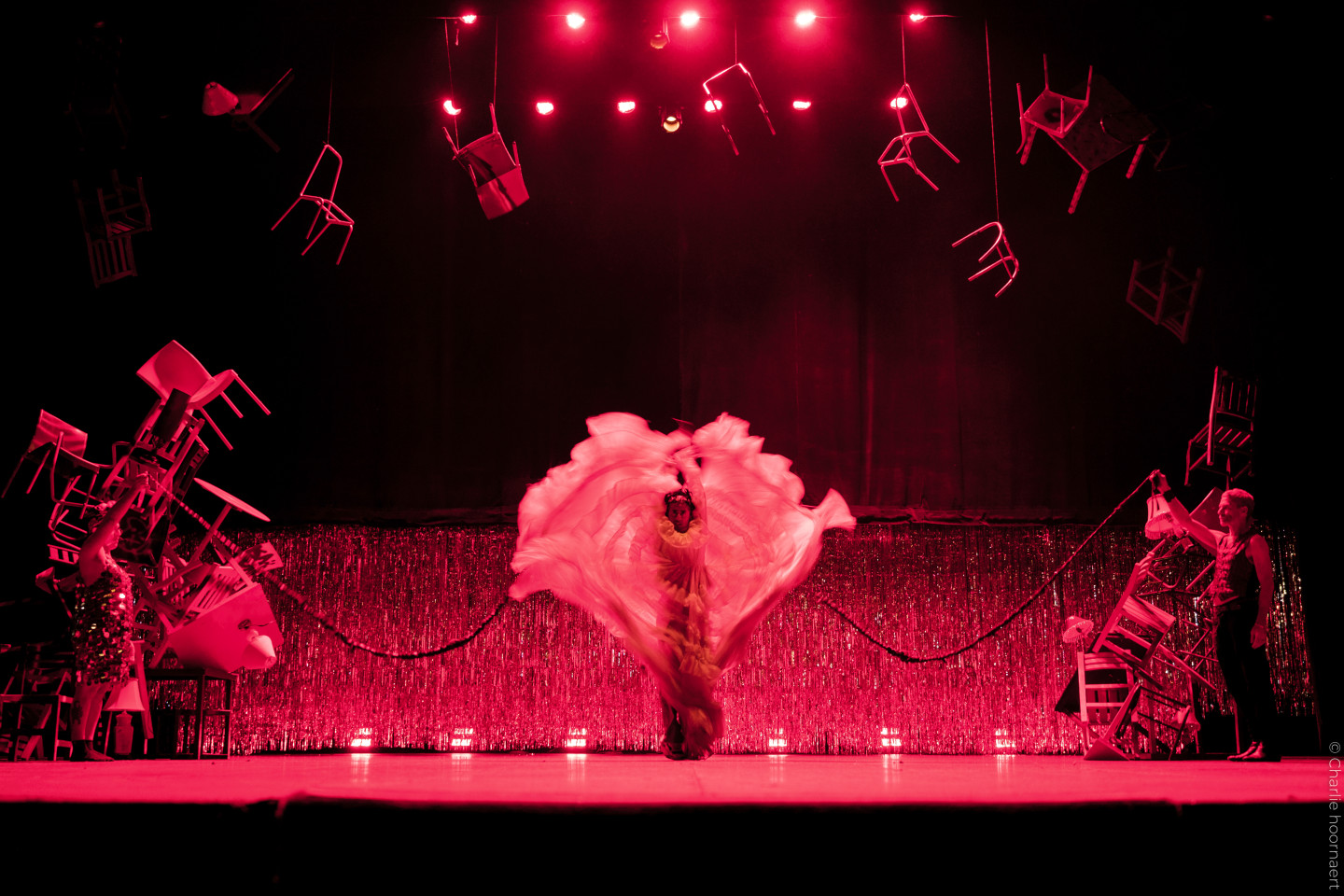
Ménage à Trois: Bienvenidx al Kabarett promotes the creation of a multidisciplinary and international dialogue based on cabaret as an expression of trans, queer and LGBTIQ+ culture in Mexico.
According to the Center for Research and Gender Studies of the National Autonomous University of Mexico, between 2014 and early 2025, at least 739 cases of murders and disappearances of sexually and gender diverse people have been recorded in Mexico.
In this same context, an upward trend can be observed in hate crimes against trans women. All of this occurs despite regulatory advances and increasing institutional attention to the issue. It is, therefore, a priority to make the activism and artistic creations of this community visible in venues with broad reach, and not only spaces directed at the LGBTIQ population.
Cabaret has historical significance for the LGBTIQ+ community in Mexico and in the participating European countries. Since its beginnings in the early 20th century, it has been a platform for free expression for the queer community. Mexican cabaret has, over time, incorporated influences from Spanish, French and German cabaret, making this international collaboration an ideal basis for artistic exchange.
Burlesque dancer and cast member Sekhmet noted: "I’m very grateful that this project came just in time for me to make a big return to the stage and have the honour of performing at Festival Internacional Cervantino and at Teatro de la Ciudad Esperanza Iris."
I find it especially important to bring burlesque and cabaret to these venues. During the process, I learned a lot and had the pleasure of working and sharing with very talented people.
Sekhmet, burlesque dancer and cast member
The project was closely developed as a cooperation between the EUNIC Mexico cluster and the Festival Internacional de Diversidad Sexual (FIDS). Through a residency and a national tour in different venues. The creative team was composed of Mexican, French, German and Spanish artists, who worked collectively to create the performance.
The project began with the appointment of an international artistic and creative leadership team, followed by virtual planning meetings to define the concept, schedule and production structure. During this phase, a local production team prepared technical materials and a project dossier, which helped secure additional performances beyond the main festival.
The casting process took place over several months, selecting performers based on artistic experience, community representation, local residency and social engagement. Later, the directors travelled to Berlin for in-person work to further develop the creative and technical aspects, after which set and costume designs were finalised. The project concluded with rehearsals in Mexico and a series of performances in several cities.
Although the final decisions regarding the set design and costumes were made in a short time, the final result stayed true to the creative vision. It was a great team effort to manage to adapt the set for three very different venues.
Gabriela Alarcón, producer
The institutional partnerships between the Goethe-Institut, CCMex and IFAL were strengthened, as teamwork and constant joint attention to the planning and production processes were required throughout the project.
Each institution was proactive and solution-oriented, adjusting its internal administrative procedures in order to meet the production’s requirements. On the other hand, the members of the Mexican cast created a remarkable synergy and later developed bonds of camaraderie and professional exchange networks.
Objectives achieved:
- Uninterrupted institutional cooperation from the beginning to the end of the project
- European directors gained a closer understanding of the cabaret scene in Mexico
- The artistic work of eight Mexican artists with diverse identities was made visible, especially those artists with trans identities
Cast member Yesica Duvali stated: "A lot of love, a lot of recognition, a lot of discipline, work, and effort that was worth it. Guanajuato embraced us, Celaya held us, and the Teatro Esperanza Iris loved us. Thank you for so much."
Stepping onto the stage with great representativity is the best reward I could ask for.
Yesica Duvali, transgender Mexican vedette and cast member
The main long-term impact of this project was the recognition of the differences between Mexican cabaret and European cabaret, highlighting that the former is a small-scale performance tradition and community - at least in Mexico City - and that is very diverse internally, which allows for flexibility and adaptability in future creative processes.