Contemporary futures, particularly within the arts, tend to lean increasingly toward two extremes: bleak dystopias or hyper-technocratic fantasies. Solarpunk offers a third path.
Solarpunk builds radically positive futures from capacities already at hand: cultural know-how, community networks, genuine technological possibilities, and develops them forward.
Namibia, with its renewable-energy ambitions and living traditions of land stewardship, provided ideal conditions for testing whether such "future-present" thinking could move from concept to embodied practice.
A Story of Sand and Energy sought to create space for equitable exchange between Namibian and European practitioners, to develop visual and sonic languages for imagining hopeful futures, and to invite audiences to become participants in these visions.
At the project's core lies a recognition: dystopia arrives through drift and inattention, while utopia demands deliberate work, participation, care and collective effort. The aim was to build public ownership over positive futures, to make hope a practice rather than a platitude.
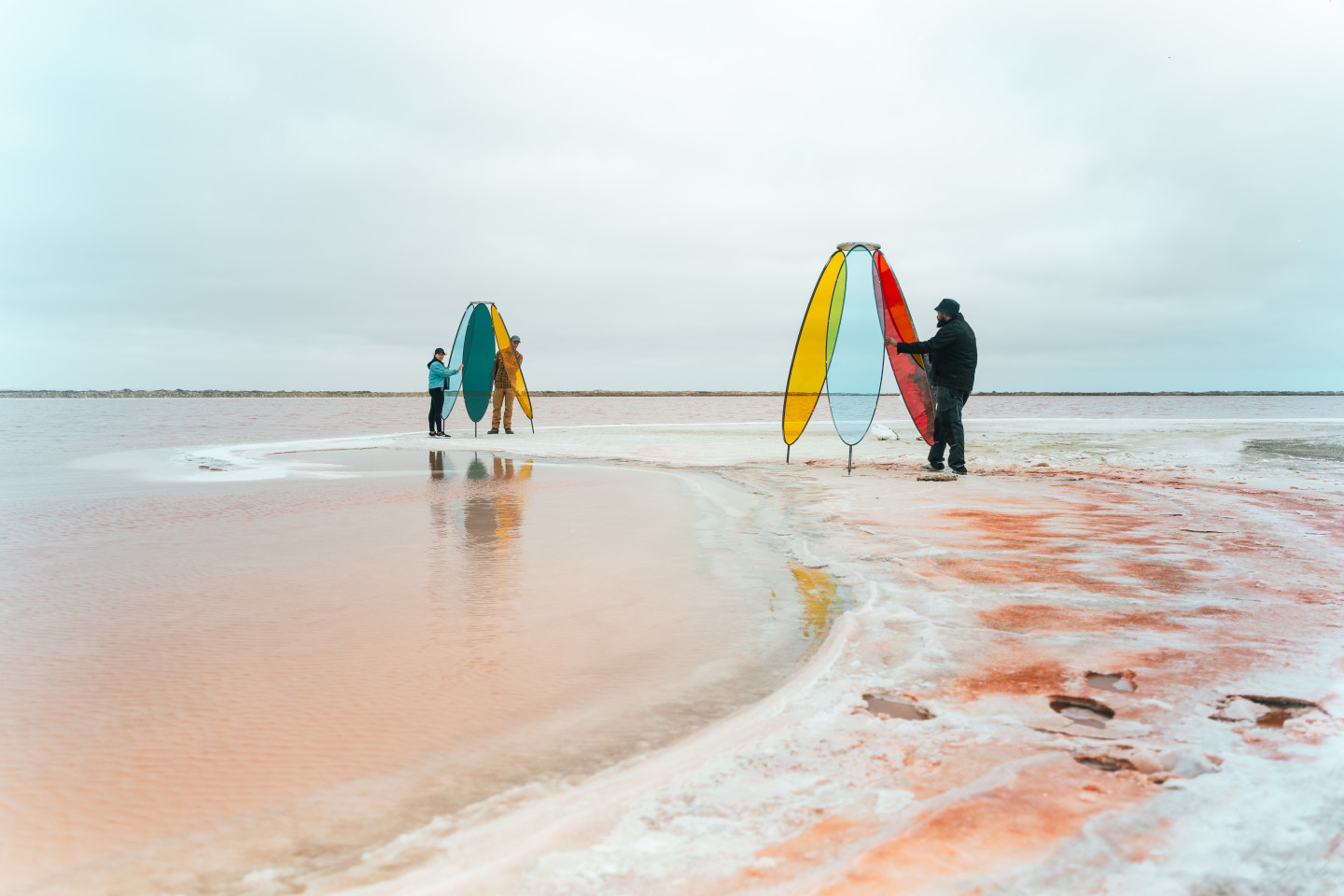
In Swakopmund, Vitjitua Ndjiharine (Namibia) and Rocío Asensi (Spain) undertook their embodied research. Both artists explored collectively along the coast and into the countryside, salt pans and deserts, visiting sites that revealed Namibia's energy future in formation such as the country's first successful green-iron initiative.
Sun, salt, wind, clean technology - these encounters shaped both the material vocabulary and conceptual architecture of what followed. The collaboration operated as genuine exchange. Rocío brought her engagement with European discourse around light and form; Vitjitua anchored the work in Namibian cosmologies and land-based practice. Each learned from the other's context, the exchange unfolding on equal terms.
I approached Namibia’s traditions and ancestral knowledge as seeds for envisioning a new future (...). This journey has allowed me to engage closely with the people and natural landscapes of this extraordinary country, fulfilling a vision I have harboured for years.
Rocío Asensi artist from Spain
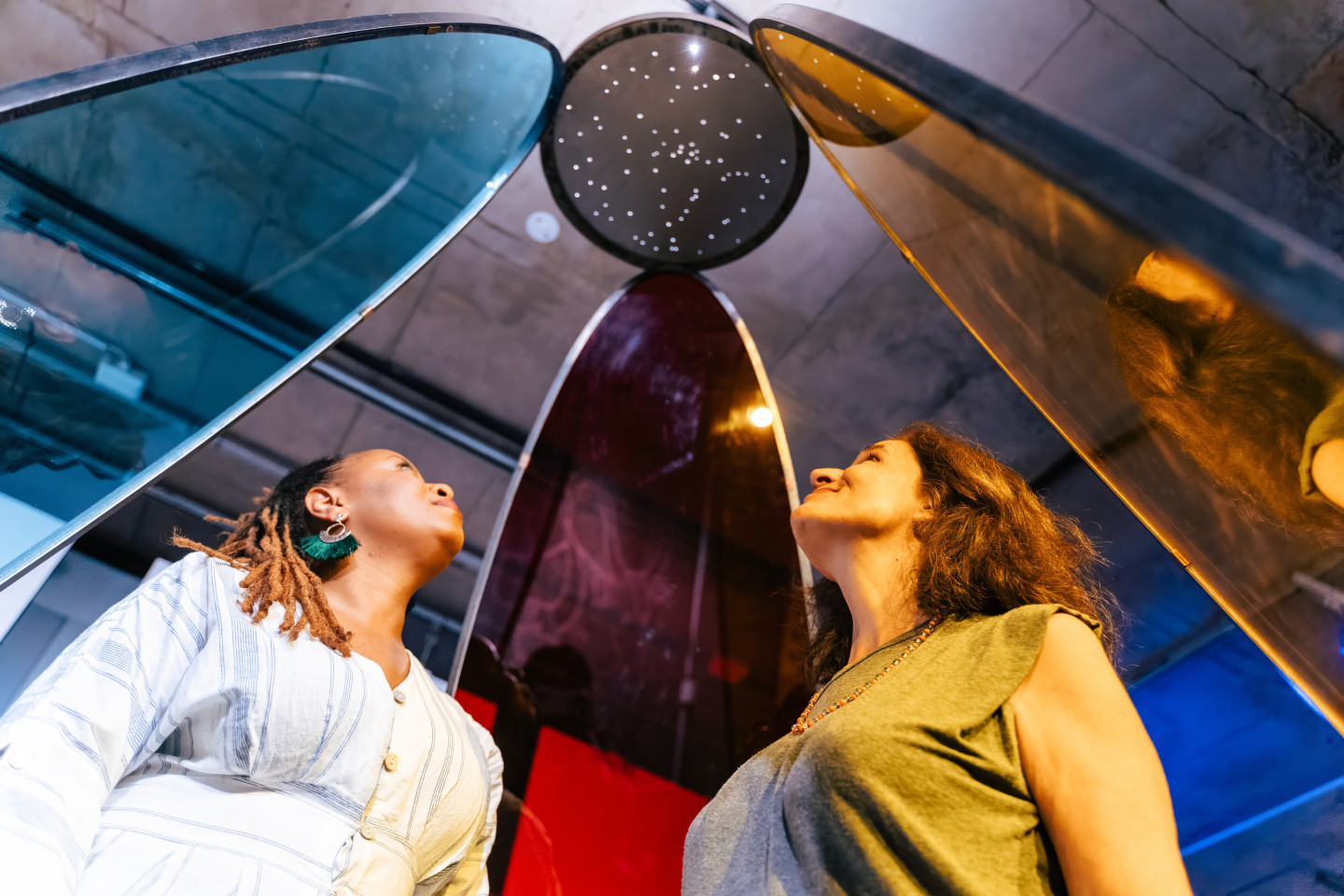
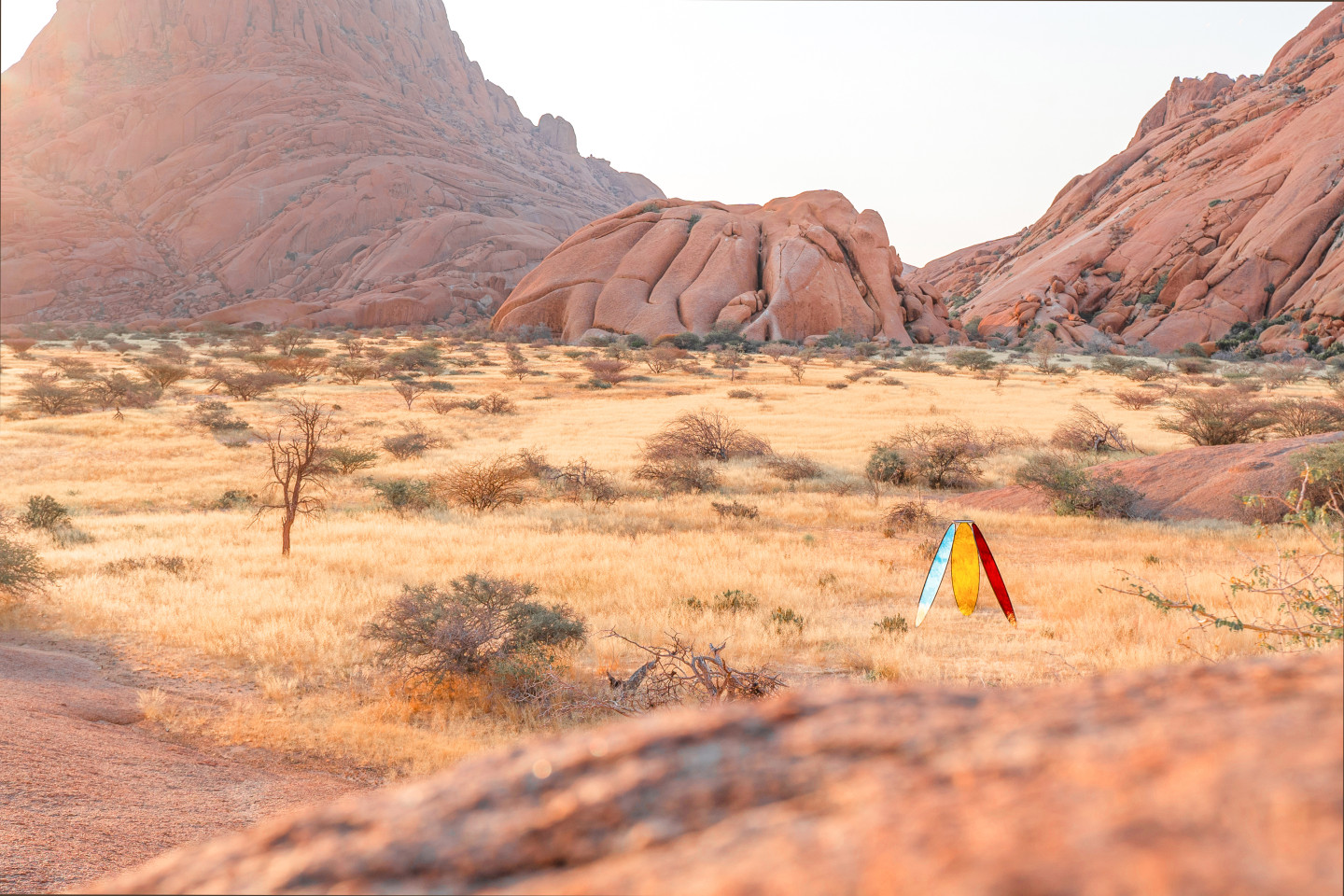
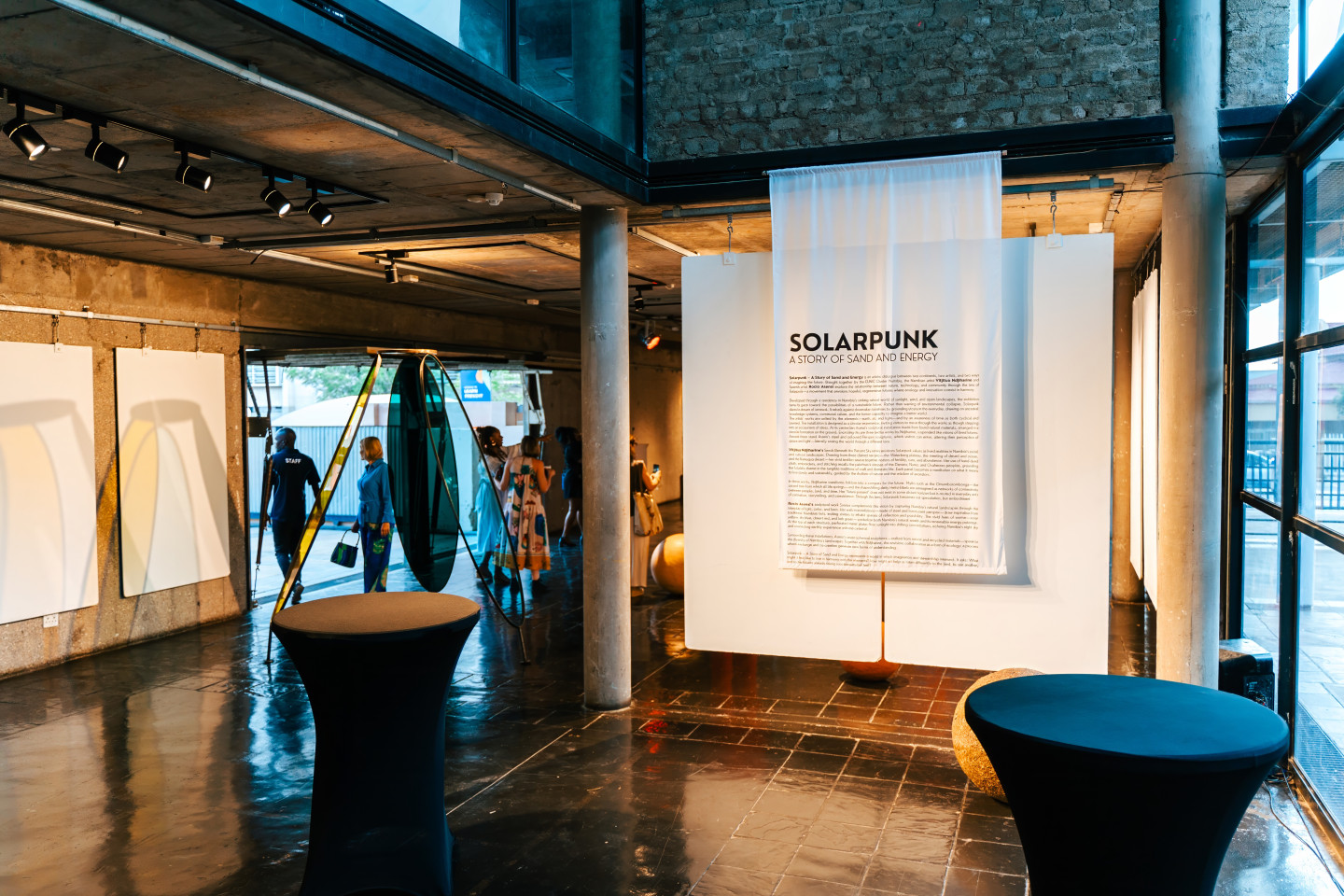
The resulting works spoke different dialects of the same language. Rocío Asensi's Sunrise offers translucent, walk-in structures that filter light and demand pause. Perforated circular plates evoke Namibian constellations; surrounding spheres, crafted from natural and recycled materials, returning the gaze earthward.
Vitjitua Ndjiharine's Seeds Beneath the Present Sky - a textile triptych - draws on indigenous cosmologies and everyday gestures to articulate lived "future-present." A compact Solarpunk Sound Garden provided counterpoint during the public exhibition in Windhoek.
Over 150 visitors attended the Windhoek opening, with a constant stream of visitors thereafter. Audience members spoke of relief, a respite from dystopian fatigue. They appreciated the accessibility of a hopeful frame, the treatment of indigenous and land-based knowledge not as archival material but as active future-making.
Both artists reported their intention to continue exploring Solarpunk and future-positive approaches, evidence that the project's impact extended beyond the exhibition's temporal boundaries into ongoing artistic development.
Thinking of an embodied approach to solarpunk - which imagines a sustainable, post-capitalist future rooted in ecological harmony - means living and feeling its principles in our daily lives, not just theorising them.
Vitjitua Ndjiharine artist from Namibia
The project continues to evolve. An international twin exhibition will connect Europe and Namibia, Windhoek and Madrid in 2026, including the travel of one Sunrise structure and experimental formats for linking audiences across continents.
What began as a single presentation transforms into a platform for sustained cultural exchange around future-positive imagination - relevant in Namibia and, as Asensi observes, increasingly urgent in Europe.