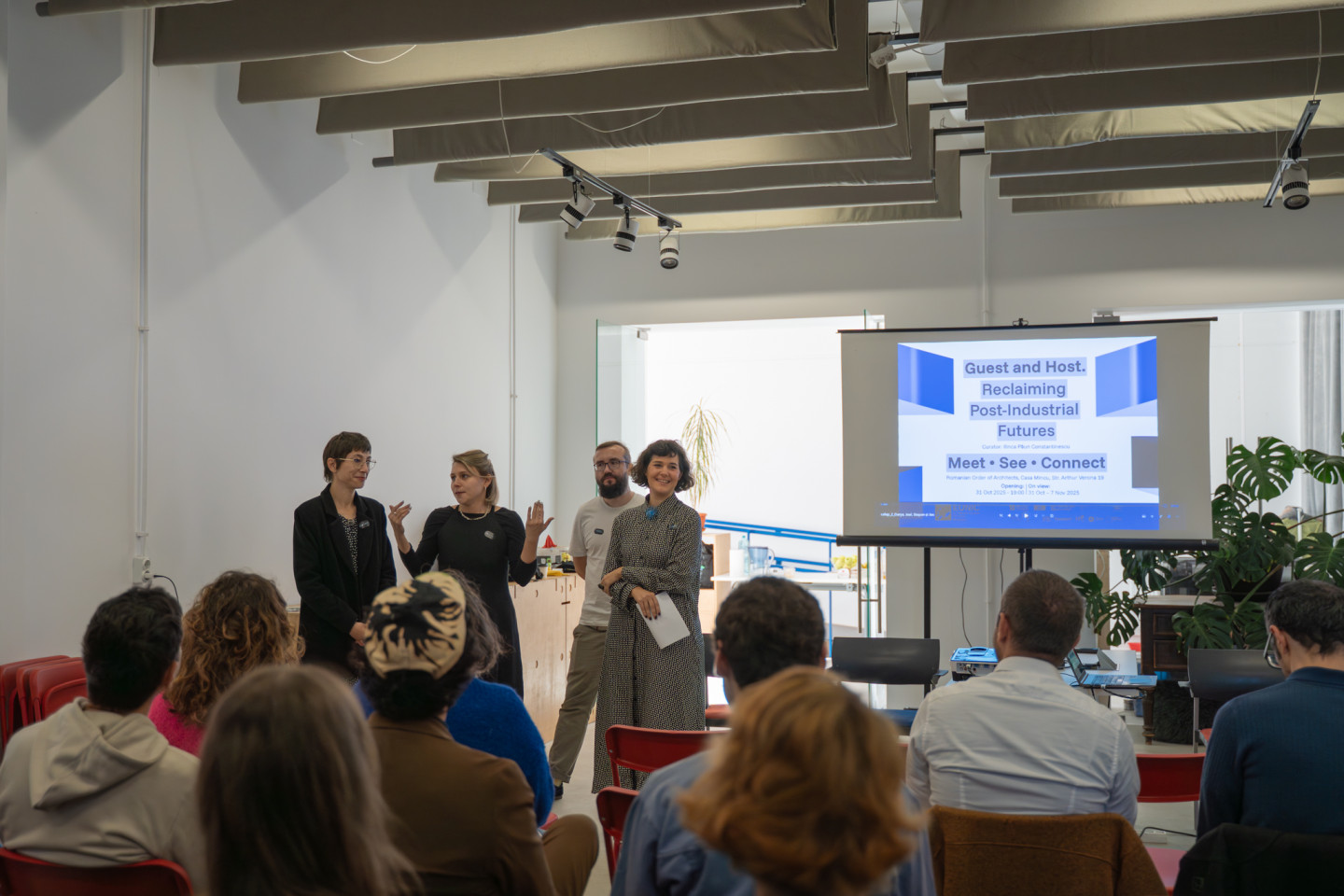
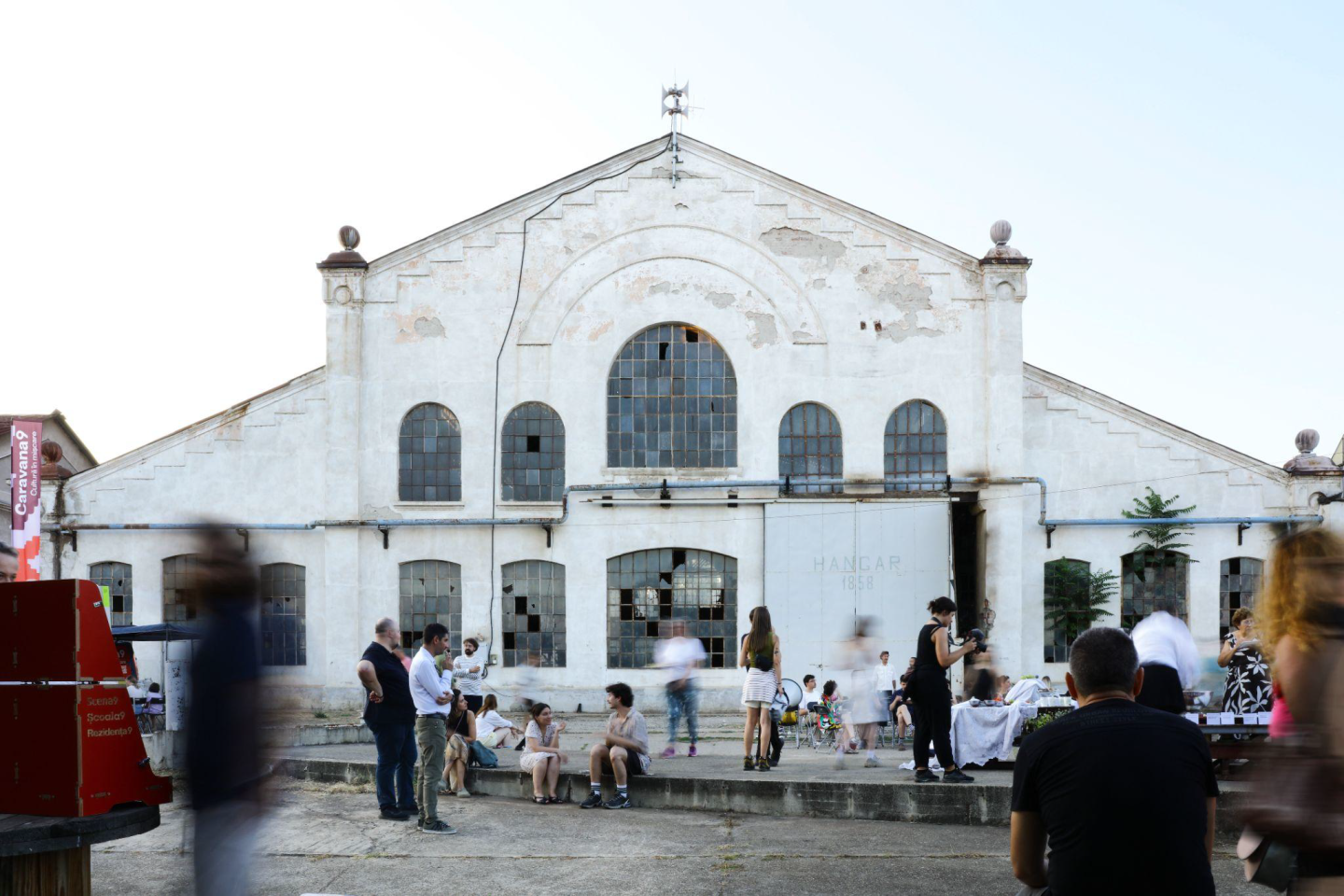
Guest and Host. Reclaiming Post-Industrial Futures was a multi-residency programme developed by EUNIC Romania that explored forgotten industrial heritage sites across the country as spaces for artistic collaboration and community building.
In the summer of 2025, nine international and Romanian artists worked alongside local organisations in selected post-industrial towns, engaging with unused industrial buildings, memories, landscapes, and people often left outside dominant cultural narratives. The project reframed artistic residencies as reciprocal relationships based on care, trust and shared responsibility.
Romania’s post-industrial towns are marked by deep transformations: factory closures, depopulation and the gradual erasure of collective memory. While these places once played a central role in national economic and social life, today they are often absent from cultural agendas. The project responded to the urgent need to re-engage with endangered industrial heritage and with communities living between memory and uncertainty. It set out to counter invisibility, neglect and extractive redevelopment by creating spaces for listening, encounter and shared reflection.
The project aimed to rethink the artist residency model through a cultural relations approach grounded in equality and mutual exchange. Its goals were to support local organisations already working for their communities, to connect them with artists from across Europe, and to generate new ways of understanding post-industrial landscapes beyond loss and nostalgia. By foregrounding hospitality, friendship and care, the project sought to reveal the social and cultural potential still embedded in these places.
Each residency was shaped jointly by the artist and the local host organisation, responding to specific local histories and sensitivities. Rather than arriving with predefined artworks, artists engaged in field research, conversations, shared meals, walks, workshops and archival explorations. Residents in the eight cities were:
- Daniel Semenciuc and Ana Barbu (Romania) in Victoria,
- Céline Berger (France) in Reșița,
- Giulia Vitiello (Italy) in Câmpina,
- Darya Akhrameika (Netherlands) in Drobeta–Turnu Severin,
- Kamila Szejnoch (Poland) in Petrila,
- Joel Blanco (Spain) in Turnu Măgurele,
- Jos Boys (United Kingdom) and Štěpán Kus (Czechia) in Bucharest.
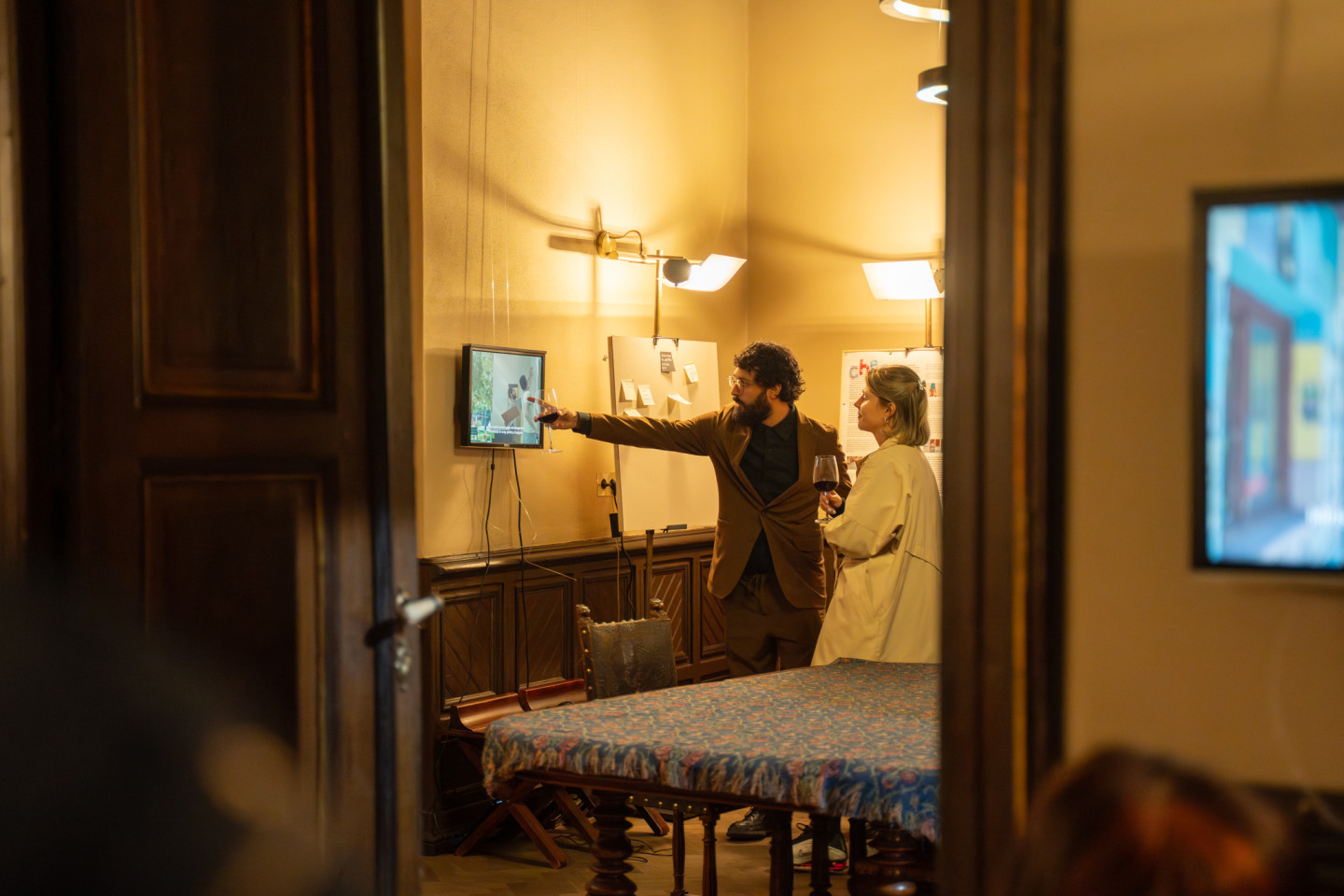
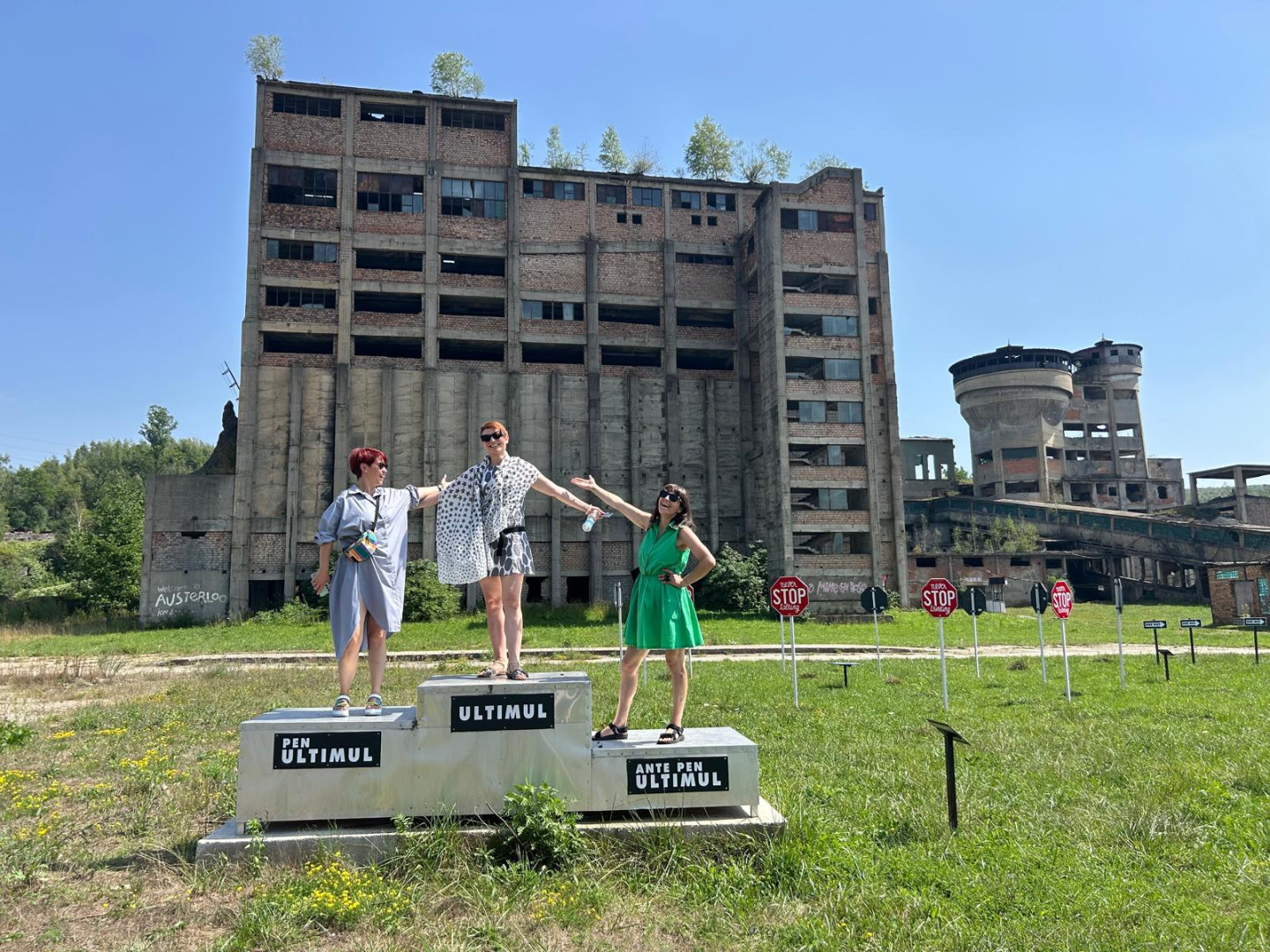
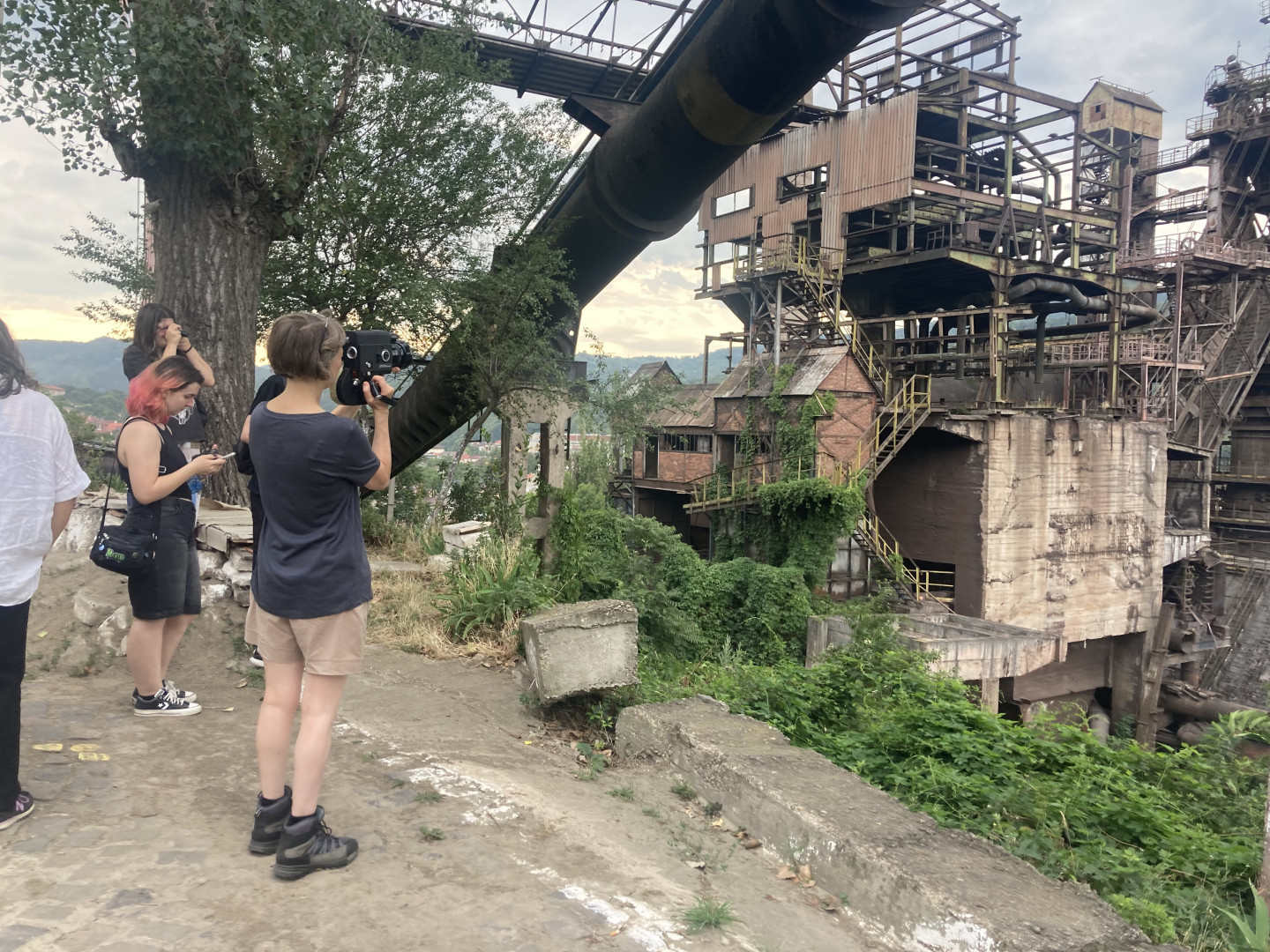
Their outcomes ranged from participatory filmmaking and performance to affective mapping, sculptural imprints and collective storytelling. Industrial sites such as shipyards, refineries, mines and factories became spaces of encounter, where artistic practice intersected with lived experience. Local residents contributed with memories, objects and personal narratives, becoming collaborators rather than “subjects”.
One of the most interesting things I discovered was not the decaying industrial infrastructure, but the strong community that still exists there.
Joel Blanco artist in residence in Turnu Măgurele
This people-to-people approach was central to the project’s cultural relations ethos. Artists worked on equal footing with hosts and communities, learning to navigate local rhythms and vulnerabilities. Hospitality was understood as a political and ethical practice: hosts shared resources, knowledge and trust, while artists practiced humility and care toward places that were not their own. Through these exchanges, derelict buildings were temporarily transformed into spaces of dialogue, imagination and collective attention.
Across the residencies, the project generated both tangible and intangible impact by creating situations where people felt seen, listened to, and actively involved in shaping narratives about their own places. Artists repeatedly highlighted the strength of local attachment to industrial heritage and the readiness of communities to engage when approached through trust and care. Together, these encounters strengthened local confidence, reopened difficult conversations about heritage and loss, and reframed post-industrial spaces as sites of care, agency and future-making.
I’m interested in how spaces include or exclude different bodies, and how small gestures of care can completely change how a place is experienced.
Jos Boys artist in residency at AMAIS
The project was built on strong, locally rooted partnerships. Each residency paired one artist with a host organisation that acted as co-curator rather than logistical support. These partners, ranging from long-established initiatives like Planeta Petrila to younger organisations such as Front la Dunăre, opened access to communities, archives and informal networks. Work was shared transparently: local partners shaped the residency context and priorities, while artists contributed methodologies and international perspectives. New partnerships emerged organically through collaboration with residents, cultural workers and institutions. Fairness and reciprocity were ensured by long-term engagement, shared decision-making and respect for local knowledge, reinforcing trust beyond the project’s duration.
The relationships formed during the residencies continue beyond the programme. Several artists and host organisations are already planning follow-up projects, exhibitions and research collaborations. In the long term, the project’s legacy lies in its methodology: a model of slow, relational cultural work that can be replicated in other post-industrial contexts. It demonstrates that sustainable cultural impact grows from continuity, trust and local embeddedness, not short-term production.
The project was realised by:
Curator: Ilinca Păun Constantinescu
Project coordination: Tamina Bojoancă, Cristiana Tăutu, Pawel Rutkowski
Communication & PR: Ioana Călinescu, Irina Marinescu, Adina Popescu
Video documentation: Gabriela Cozma
Key visual: Maks Graur